

Tags:
p+B11 is aneutronic (although the side-reactions aren't) and B11 is comparatively abundant in the Earth's crust.
A novel approach to proton-boron 11 fusion.
A novel approach to proton-boron 11 fusion.

What transformed Cheradenine Zakalwe into the superlative Special Circumstances asset he is today?
Use of Weapons by Iain M. Banks
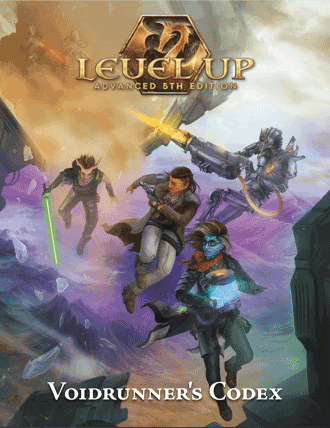
The complete Voidrunner's Codex Full Digital Box Set, the spacefaring expansion from EN Publishing for the Level Up! tabletop roleplaying game and Dungeons & Dragons Fifth Edition.
Bundle of Holding: Voidrunner's Codex
Tags:
![[staff profile]](https://www.dreamwidth.org/img/silk/identity/user_staff.png)
![[site community profile]](https://www.dreamwidth.org/img/comm_staff.png)
Happy Wednesday!
I'm taking search offline sometime today to upgrade the server to a new instance type. It should be down for a day or so -- sorry for the inconvenience. If you're curious, the existing search machine is over 10 years old and was starting to accumulate a decade of cruft...!
Also, apparently these older machines cost more than twice what the newer ones cost, on top of being slower. Trying to save a bit of maintenance and cost, and hopefully a Wednesday is okay!
Edited: The other cool thing is that this also means that the search index will be effectively realtime afterwards... no more waiting a few minutes for the indexer to catch new content.
I hope you're not tired of first contact stories, because I've gone and written another one. Apparently this is what's on my mind lately? Anyway here's Waiting for Them in Nature Futures, go, read, enjoy!
(![[personal profile]](https://www.dreamwidth.org/img/silk/identity/user.png) james_davis_nicoll Apr. 22nd, 2026 08:51 am)
james_davis_nicoll Apr. 22nd, 2026 08:51 am)
james_davis_nicoll Apr. 22nd, 2026 08:51 am)
Can the salvation of the Literature Club be something as simple as blackmail?
O Maidens in Your Savage Season, volume 2 by Mari Okada & Nao Emoto
Tags:
(james_davis_nicoll Apr. 21st, 2026 06:51 pm)
james_davis_nicoll Apr. 21st, 2026 06:51 pm)And I know 700 pages PDFs are a vote-loser.
Any of my reviews from 2025 that people especially liked?
Any of my reviews from 2025 that people especially liked?
                  2022   2024   2025   2026
Novel             1151   1420   1078   1153
Novella            807    962    739    807
Novelette          463    755    394    414
Short Story        632    720    610    507
Series             707    677    621    687
Graphic/Comic      340    457    265    362
Related            453    775    431    479
Dramatic, Long     597    763    610    650
Dramatic, Short    386    490    451    471
Game               --     334    298    357
Editor, Short      319    530    322    305
Editor, Long       182    254    162    234
Pro Artist         233    270    214    228
Semiprozine        312    338    334    324
Fanzine            243    286    243    224
Fancast            384    693    376    370
Fan Writer         368    363    329    308
Fan Artist         230    180    186    176
Poem                --     --    219    202
Lodestar           451    345    268    244
Astounding         416    349    341    290
Tags:
Congratulations to the finalists!
2026 Hugo, Lodestar, and Astounding Award Finalists
( Read more... )
2026 Hugo, Lodestar, and Astounding Award Finalists
( Read more... )
Tags:
(james_davis_nicoll Apr. 21st, 2026 08:07 am)
james_davis_nicoll Apr. 21st, 2026 08:07 am)
How much of the universe does *science as we know it* open to us?
The Queen of Air and Darkness and Other Stories by Poul Anderson
Tags:
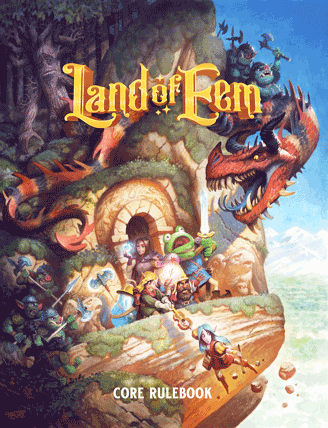
A bundle for Land of Eem, the whimsical tabletop fantasy roleplaying game of colourful characters exploring the Mucklands from Star & Flame Games and Exalted Funeral.
Bundle of Holding: Land of Eem
Tags:

Congratulations to the finalists!
2026 Aurora Award ballot announcement
The nominees are ( Read more... )
Tags:
(james_davis_nicoll Apr. 20th, 2026 10:44 am)
james_davis_nicoll Apr. 20th, 2026 10:44 am)
Looking for more romance in your SF? Look no further...
Five Science Fictional Solutions to Finding Your One True Love
Tags:


A stalwart trader sets out to recover a lost probe on behalf of feeble space giants.
Mission of Gravity by Hal Clement
(jreynoldsward Apr. 18th, 2026 10:17 pm)
jreynoldsward Apr. 18th, 2026 10:17 pm)Warning: this is a book business rant.
Talk about a rude awakening. Draft2Digital’s announcement that they would charge a yearly $12 maintenance fee to accounts netting less than $100 per year—allegedly as a means to counter AI slop—made me sit down and look at my records. I’ve had the perception over the past few years that my sales at D2D have gone down. I attributed that status to lack of a new release last year, the economy, the state of the world overall, and the need to change covers. I’ve been running regular promotions, sales, and talking up my backlist, both on social media and my newsletter.
Then this announcement happened.
I was already annoyed at D2D because they were slow to confirm the publishing of my new February release, Vision of Alliance, at Barnes and Noble, which has been my best selling vendor, by TEN DAYS. I had been checking my clicks at D2D’s Books2Read app because I was using their universal links and noticed that—hmm, clicks aren’t happening for a new release, what’s up?
Eh, I figured it was the wackiness of the economy and our current political situation and not so much the publishing issue. Plus it was not a particularly cozy fantasy (look, I’m really bad at cozy, though maybe I should give it a try. One of these days. Though I do have one book that I occasionally call a “cozy apocalypse.” It’s…kinda sorta cozy). Nonetheless, the results for the Vision of Alliance book launch were disappointing, given that I’d lined up what I thought was a good set of promotions, plus I had featured it on my new website that has specific book landing pages. The lack of sales didn’t make sense AT ALL, unless it was the slowness of the Barnes and Noble link to show up on D2D. But I just figured that my readers weren’t interested in a return to the world of the Seven Crowned Gods, so I would need to pivot. I put the second book of the trilogy aside and began working on a new project.
Meanwhile, as a result of the listing delay of Barnes and Noble links for Vision of Alliance, I had put direct links to Barnes and Noble for all my books on their respective landing pages. About half of the Barnes and Noble links on D2D’s universal links were not working. I ended up pulling up my listings on B&N directly to get the page links I needed. Thankfully, part of my preparation for releasing Alliance was changing websites to a setup designed specifically for authors, so it was easy for me to plug in those links. It definitely saved me a lot of energy and angst.
At the same time, I kept hearing mutterings on various indie author social media sites about issues with D2D overall. Poor customer service. Problems getting listings approved. Smashwords authors having more complications during the transition with books not appearing on D2D, or their books getting mangled. Glitches with the ebook catalog getting uploaded to Bookshop. Concerns about censorship. Broken links. I didn’t get into details because at the time I was working with my spouse to help close down part of his retirement side business, which involved a lot of physical labor, and, well, I’m getting up there in years. I don’t have the energy I used to have.
D2D’s announcement made me angry enough to start looking at my books and their links. Good grief. Some links worked. Some didn’t. Some worked one time, but didn’t another. What’s worse, the link to a book I recently had put on sale didn’t work AT ALL. Then it did. Then it didn’t. Up and down over the course of several hours.
That was when I really got angry, and made the decision to leave D2D rather than pay them $12 a year. If I’m going to pay for a service, then I expect things to work. If they’re providing me a universal book link, well, that link should come up consistently—and that apparently wasn’t happening.
But with 32 books, changing this stuff takes time. As a temporary stopgap while I went through the process of going direct once more, over the course of several hours I added links on my website’s book landing pages to every vendor that I was selling with through D2D. Couldn’t trust the usefulness of those universal links, obviously. Back to individual listings, which I had done before.
Then I sat down and crunched the sales numbers for the last five years.
Yikes.
I have not had a good sales year on D2D since 2023. That was about the time I went to universal book links through them, rather than listing the Apple, Barnes and Noble, Kindle, and Kobo links separately. Meanwhile, my Amazon sales have been fairly steady, except for a big surge in 2022 and 2023, when I was part of Kindle Vella. My Ingram sales for paperback editions have been consistent as well, although I got hit with returns in 2025 which impacted payouts for that year.
$12 for account maintenance doesn’t look so good after all. Especially since the numbers keep falling.
All right, then. Time to do something new—and right away, part of that for me means moving my catalog off of that site. One challenge I face is that my previous accounts with Barnes and Noble and with Kobo are tied to an email address that no longer exists. I apparently opened a Google Play account, then didn’t do anything with it. I need to open an Apple account and get that set up. So there’s a lot of business setup to do.
That’s the first piece.
The next one is uploading everything to these assorted sites (32 books!) and getting the word out that yes, I have stable links available for my books now.
After getting a request for Kindle epubs on Itch, I’m going to put those up there, as well.
Additionally, I’m adding hardcover editions to my catalog to supplement already-available ebook and paperbacks. I’m seeing a rise in hard copy sales and want to take advantage of that opportunity. Fortunately, that’s an easy process because I just need to take my paperback interior and upload it, then revise my paperback cover for hardback in BookBrush…which is actually quite easy to do. Hello, Bowker (the service that distributes the US book identification numbers used by the industry), I’m finally forking out for a block of 100 ISBNs. At least I shouldn’t need to buy any more for quite some time.
Finally, I am getting serious about finding a means to sell direct. I’ve done the Ko-fi store in the past, and I may do it again with a different payment processor than Paypal. But I also need to find a better means to do direct, one that covers taxes and processing. I somewhat have the direct option for my paperbacks and hardcovers through Ingram Spark’s Share and Sell link, which…I get a better return than I would through Ingram’s regular distributors (alas, this is only a US option).
Arrgh. It’s a lot of work when I’d much rather be writing. Nonetheless, it’s part of the business and…it has to be done. Sigh. But that’s the life for any writer, indie or traditional—it just happens faster to indies. And if I want commiseration, I just need to pull out an Anthony Trollope book that talks about the publishing business (The Way We Live Now, An Editor’s Tales, Autobiography) and soothe myself with the notion that the more things change, the more they stay the same. Trollope and writers of his era had to hustle to be recognized.
Sounds quite familiar.
Meanwhile, you can find my books at https://www.joycereynolds-ward.com. Sales and specials are at the top of the listings. I write a variety of science fiction and fantasy. Or drop a tip at my Ko-fi: https://ko-fi.com/joycereynoldsward
And oh hey! It’s Indie April! I have a bunch of ebooks on sale, starting with my Resistance and Romance! Itch bundle featuring six of my books heavy on relationships in the face of corporate and political turmoil. That will go for all of April. Plus I have Vision of Alliance and The Cost of Power Omnibus edition both available in ebook at $3.99 throughout April.
Poll #34492 Books Received, April 11 — April 17
Open to: Registered Users, detailed results viewable to: All, participants: 37
Which of these look interesting?
View Answers
The Thrice-Bound Fool by Christopher Buehlman (Ocober 2026)
13 (35.1%)
The Slantwise Histories and Other Stories by Alix E. Harrow (October 2026)
22 (59.5%)
Nightcurse by Emma Hinds (October 2026)
4 (10.8%)
The Killing Spell by Shay Kauwe (April 2026)
10 (27.0%)
Claimed by the Orc King by Roxy Taylor (November 2026)
3 (8.1%)
Some other option (see comments)
1 (2.7%)
Cats!
27 (73.0%)
.